
Did you know that disclosure signing only begins after escrow is open?
Once escrow opens, the initial deposit is made. Then, the disclosure process starts.
These disclosures give the buyer the chance to learn everything there is to know about the property and its surroundings. The real estate disclosure process is therefore an informational experience for a homebuyer!
Prepare for your home sale or purchase by checking out this guide to the common disclosures in real estate. This way, you won’t miss anything in the fine print!
Real Estate Disclosure Process Overview
The seller’s disclosure will require the seller to be honest about the house and its conditions. They need to include details about any renovations, damages, or other pertinent information that could impact the safety of the home and its occupants.
During disclosure signing, the buyer reviews and signs off on all disclosures. This means the buyer is accepting that they are comfortable with everything they have found out about the house at this point.
If the buyer is unhappy with the conditions revealed, they should not sign yet. This is the moment to determine if there is a way to address the issue or if the home sale will be canceled.
If the buyer ignores information in the disclosure and is upset with it later, the seller is protected from any legal action.
Successfully completing the disclosure process permits both parties to move forward to the next step in a smooth closing process!
Importance of Understanding Disclosures
The information that comes out of the residential property disclosure process is really beneficial!
Home buyers get to find out essential facts about their new home. In a way, it reminds sellers they must be truthful and that there are legal consequences if they are not.
These are the main reasons to understand disclosures:
- Negotiate fixes for problems or issues that come up
- Buyers can ask for money or credit from the seller if there is something unfavorable
- Opportunity to walk on the offer if no deal can be reached
- Avoid lawsuit for either party
If home sellers and buyers do not properly communicate at the disclosure stage, there may be an escrow failure around the corner. Next up will be the inspection stage of escrow, where professionals will be reviewing every aspect of the home!
Most Common Disclosures in Real Estate
Disclosures in real estate vary greatly based on property type and location of property. This is because states and counties have different laws all across the country!
California in particular is strict when it comes to disclosure agreements. There are a handful of property disclosures that are required by law.
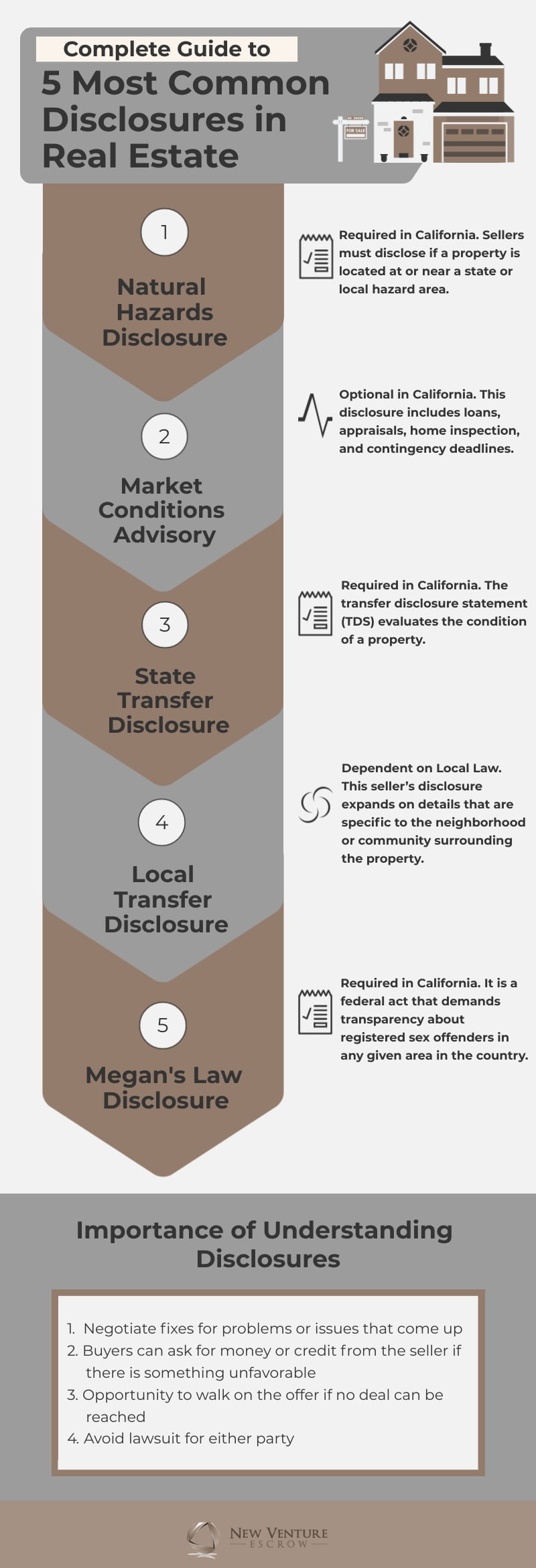
Review the 5 most common disclosures in real estate to prepare to get familiar with the types of disclosures you can expect!
1. Natural Hazards Disclosure
First on the list is the natural hazards disclosure. Real estate brokers or sellers must disclose if a property is located at or near a state or local hazard area.
Common hazards to report include:
- Earthquake faults
- Seismic zones
- Flooding
- Wildfires
- General fire hazards
- Environmental contamination
The Natural Hazards Disclosure is required by law in California to protect buyers.
2. Market Conditions Advisory (MCA)
Market Conditions Advisory, also known as MCA, covers items more financial in nature. This disclosure includes loans, appraisals, home inspection, and contingency deadlines.
The goal of the MCA is to relay to all parties that there are no guarantees on the worth of the house. In this residential property disclosure, there are notices about the inherent risk of buying and selling a home. It mentions how it is impossible to to predict the future and that market conditions can change unexpectedly.
The MCA warns buyers about pursuing multiple offers. Sellers are reminded that it is their own individual choice to accept the asking price.
The MCA is not required by law in California, however it is generally helpful to complete this disclosure anyway.
3. State Transfer Disclosure
The State Transfer Disclosure is required for all home sales in California. The transfer disclosure statement (TDS) evaluates the condition of a property.
Every residential seller must complete the TDS document. It will let the buyer know about major defects at the property.
The residential property disclosure statement includes appliances, wiring, smoke detectors, and any object that will remain in the home.
Sellers should be thorough in filling out the information, and buyers should be equally thorough in reviewing the statement.
4. Local Transfer Disclosure
This seller’s disclosure expands on details that are specific to the neighborhood or community surrounding the property.
The local transfer disclosure can include plans for the neighboring land, airport influence details, or rules related to rental zones. There could be significant factors in the neighborhood that might affect the buyer’s quality of living.
Local transfer disclosures are subject to local regulations and recommendations.
5. Megan’s Law Disclosures
Megan’s Law is a federal act that demands transparency about registered sex offenders in any given area in the country. State laws determine what this means in the context of real estate disclosures.
In California, there is a mandatory Megan’s Law Disclosure.
It may seem surprising, but it is not the seller’s responsibility to provide this information. Instead, it is the buyer’s responsibility to check for registered sex offenders in the online California database.
Sellers, make sure you review the database before signing! Once you sign this property disclosure, you waive your right to contest on these grounds.
Keeping Up With Disclosure Statements
There is a lot of paperwork involved in the disclosure stage alone, and even more for the total escrow process!
The best way to easily access your files and sign them on-the-go is to use a mobile escrow app, such as VentureTrac. It will help you meet deadlines and review all of the details you need to know before finalizing your home purchase or sale. Contact one of our agents to learn how you can get started on the path to an easier escrow experience!